Climate Change
Climate change is the defining challenge of our time, and it affects each and every one of us. Here you can learn about what climate change is, the ways in which it is occurring in Hong Kong, what the Government is doing to combat the problem, and how you can help too.
What Climate Change is
Climate change refers to the change in climate as a result of human activities that cause a change in the atmospheric composition, in addition to natural climate variability. Human activities cause increases in atmospheric concentration of greenhouse gases, mainly through burning of fossil fuels. The greenhouse gases act like a blanket in the atmosphere, trapping heat on Earth and keeping our planet warm. However, the human-induced increases in greenhouse gases have enhanced the greenhouse effect and caused the climate system to warm – a phenomenon commonly called global warming. This general rise in temperature in turn leads to a proliferation of other problems, such as more frequent heat waves and extreme rainfall events, increased global proportion of major tropical cyclones, rise of sea level, reduction in agricultural production, scarcity of water resource in certain regions, spread of disease, loss of ecological and environmental balance, etc.
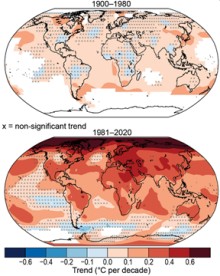
Temperature trend (℃ per decade) over 1900-1980 (upper) and 1981-2020 (lower) (Image credit: IPCC AR6)
Global Warming TrendClimate Change in Hong Kong
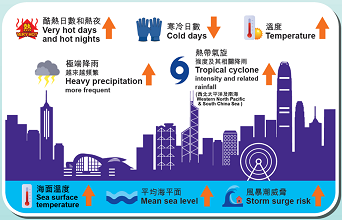
In line with the global trend, Hong Kong has been warming up in the last century or so. The number of hot nights is increasing while the number of cold days is decreasing. Apart from rising air temperature and sea surface temperature, Hong Kong experiences more frequent heavy rain than before. The sea level is rising in Victoria Harbour.
Information about climate change and the situation in Hong Kong is available through the following links.
Carbon Neutrality and Sustainable Development WebsiteClimate Change ImpactsMore on climate changeHong Kong’s Climate Action Plan 2050Hong Kong's Climate Action Plan 2050 Strategies & ProgressHong Kong’s Climate Action Plan 2030+Hong Kong Climate Change Report 2015Updated Version of the Hong Kong Roadmap on Popularisation of Electric VehiclesHong Kong Roadmap on Popularisation of Electric VehiclesGreen Transformation Roadmap of Public Buses and TaxisClean Air Plan for Hong Kong 2035Waste Blueprint for Hong Kong 2035The Paris Agreement and Hong Kong
The Paris Agreement, which came into force on 4 November 2016, applies to the Hong Kong Special Administrative Region (HKSAR) as well. As part of China, the HKSAR has the duty to make its contribution in order to achieve the goals of the Paris Agreement. The Paris Agreement calls upon the Parties to cooperate with the private sector, civil society, financial institutions, cities and regions to mobilise stronger and more ambitious climate actions in the world.
Carbon Emissions and Hong Kong
Hong Kong is among the earliest cities in Asia taking actions to combat climate change. We stopped the construction of new coal-fired power plants in 1997, and our carbon emissions peaked in 2014. Hong Kong's total GHG emissions in 2024 were approximately 33.2 million tonnes of carbon dioxide equivalent (CO2-e), representing a reduction of about 22 per cent compared to 2005 levels and a reduction of about 27 percent from the peak emissions in 2014; The per capita GHG emissions continued its downward trend, reaching a new low of 4.41 tonnes CO2-e. It is about 30 per cent lower than those in 2005 and 2014, and is about a quarter of that of the United States and 60 per cent of that of the European Union. To meet the country's "dual carbon" targets, Hong Kong has set the ambitious targets to achieve carbon neutrality before 2050, and reduce Hong Kong's carbon emissions by 50% before 2035 as compared to the 2005 level.
In 2021, the Government announced Hong Kong's Climate Action Plan 2050, which outlined four major decarbonisation strategies, namely “net-zero electricity generation”, “energy saving and green buildings”, “green transport” and “waste reduction”, that would lead Hong Kong towards the goal of carbon neutrality before 2050.
Climate Change Initiatives in Hong Kong
Net-zero Electricity Generation
Electricity generation is Hong Kong’s major source of carbon emissions, accounting for about 61% of the city’s total carbon emissions in 2024. The Government has requested the two power companies to use cleaner fuel for electricity generation. The share of coal in electricity generation has reduced from about 50% in 2015 to less than 20% at present, while the share of natural gas has significantly increased from about 25% to more than 50%.
Based on the four energy policy objectives of safety, reliability, affordability and environmental performance, the Government will, through enhancing regional co-operation, progressively increase the use of zero-carbon energy in electricity generation, reduce reliance on fossil fuels, and achieve the long-term goal of "net-zero electricity generation" i.e. to increase the share of zero-carbon energy in the fuel mix of electricity generation by 2035 to about 60% to 70%; and to achieve the target of "net-zero electricity generation" and carbon neutrality by 2050.
The Government has been developing renewable energy (RE) projects at various premises in recent years. These include developing large-scale solar energy generation projects and waste-to-energy (WtE) facilities at suitable locations, as well as requiring new government buildings to utilise more RE. The Government has, since 2017-18, earmarked a total of HK$3 billion to install small-scale RE systems at appropriate government premises. Regarding WtE facilities, the Integrated Waste Management Facilities Phase I (I·PARK1), which has commenced trial operation since December 2025, is expected to generate about 480 million kilowatt-hours (kWh) of electricity each year upon full commissioning. The Integrated Waste Management Facilities Phase 2 (I·PARK2), currently under planning, is expected to generate 960 million kWh of surplus electricity each year for export to the grid, apart from supporting the facility's daily operation. To encourage RE development in the private sector, the Government has introduced the Feed-in Tariff Scheme and a series of supporting measures, including suitably relaxing the requirements governing the installation of solar energy generation systems on the rooftops of New Territories Exempted Houses (i.e. village houses); and establishing appropriate non-combustibility requirement and standard for building-integrated photovoltaics systems. The Government will continue to grapple with various objective constraints and develop local RE, and will strengthen publicity and promotion efforts to encourage the community to develop RE.
Promoting Energy Saving
The most direct and effective method of reducing our "carbon footprint", or the extent to which our activities produce greenhouse gases, is to enhance the overall energy efficiency of our society.
Being an international financial and commercial centre, the majority of Hong Kong citizens’ daily activities take place in skyscrapers. The resulting use of air-conditioners, lifts, lighting and various electrical appliances consumes a large amount of energy. Buildings account for about 90% of Hong Kong’s total electricity consumption and therefore, the efficient use of energy is essential for reducing carbon emissions.
The Government regulates the energy efficiency of commercial buildings mainly through the Buildings Energy Efficiency Ordinance (Cap. 610). It requires buildings to comply with the energy efficiency standards of building services installations (including air-conditioning, electrical, lighting, lift, and escalator installations) stipulated in the Code of Practice for Energy Efficiency of Building Services Installation when they are newly constructed or undergoing major retrofitting works. The Ordinance also requires two types of buildings to conduct energy audits in accordance with the Code of Practice for Building Energy Audit to continuously improve their energy efficiency. The Government updates both Codes of Practice in consultation with the trade every 3 years. To date, four updates have been carried out.
The Buildings Energy Efficiency Ordinance has been amended to expand the scope of regulation to more types of buildings, shorten the energy audit intervals, and mandate the disclosure of information in energy audit reports. These amendments will take full effect in September 2026, and will save an additional 500 million kWh of electricity annually in 2035, equivalent to the annual electricity consumption of about 150,000 three-person households.
The Government also continues to promote various green building and energy saving measures. An example is retro-commissioning, which systematically assesses a building’s energy performance with a view to identifying improvements in operations for energy saving.
To further facilitate the public in choosing energy efficient appliances and raise public awareness of energy saving, the Government introduced the Mandatory Energy Efficiency Labelling Scheme (MEELS) in 2008 through the Energy Efficiency (Labelling of Products) Ordinance (Cap. 598) to inform consumers of the energy efficiency performance of the prescribed products.
Currently, the MEELS covers 11 prescribed products including room air conditioners, refrigerating appliances, compact fluorescent lamps, washing machines, dehumidifiers, televisions, storage type electric water heaters, induction cookers, LED lamps, gas cookers and gas instantaneous water heaters. The Government would review the scope of MEELS and the grading standards from time to time to ensure that the relevant requirements keep pace with the times.
The Government had already fully implemented the third upgrade of the MEELS grading standards in September 2025. The third upgrade enhanced the energy efficiency requirements for refrigeration appliances, washing machines, and storage type electric water heaters. The upgrade can save an additional 270 million kWh of energy annually, equivalent to the annual electricity consumption of approximately 80,000 three-person households.
The Government launched a set of carbon audit guidelines for buildings in 2008, and issued an updated version of the guidelines in 2026. Users and managers of buildings can use the guidelines to assess the carbon emissions from their buildings, to explore room for improvement and to develop emission reduction measures so that their buildings can leave a smaller carbon footprint with less operating expenses through improving energy efficiency and waste reduction. The Government has been promoting carbon audit and taking the lead to conduct carbon audits for government buildings and public facilities. From 2017-18, bureaux and departments have started conducting regular carbon audits on major government buildings and will disclose their audit results.
Practical Guide on Carbon Audit and ManagementExcel Template for “Paper Approach” Carbon AuditGuidelines to Account for and Report on Greenhouse Gas Emissions and Removals for Buildings in Hong Kong (2026 Edition)To further enhance the Government's carbon management efforts, the Government is progressively extending the carbon audit practice to typical major government infrastructure, including water treatment works, sewage treatment facilities, fresh water and salt water pumping facilities, road lighting systems and ventilation systems at public transport interchanges, etc. Outcomes of the carbon audit will not only help the relevant departments formulate carbon reduction strategies for the above infrastructure and similar facilities, but will also assist them in establishing the mechanism and guidelines for conducting carbon audit, for other infrastructure in the future.
Using Energy-efficient Transport and New Energy Vehicles
The use of our extensive and energy-efficient public transport system and new energy vehicles can help reduce greenhouse gas emissions, and is committed to further expanding and upgrading our public transport infrastructure with an emphasis on railways, and encouraging the use of new energy vehicles (including electric vehicles). Going forward, we will facilitate walking and continue to provide a safe, efficient, reliable and environment-friendly transport system with multi-modal choices that meets the community’s needs.
The Government announced in December 2024 the Green Transformation Roadmap of Public Buses and Taxis, outlining the future direction and policy objectives for the green transformation of buses and taxis in an orderly manner. Major measures include earmarking HK$135 million and about HK$470 million respectively under the New Energy Transport Fund to subsidise the purchase of 3 000 electric taxis by the taxi trade and about 600 electric buses by the franchised bus operators.
The Government announced in February 2026 the Updated Version of the Hong Kong Roadmap on Popularisation of Electric Vehicles (the Updated Roadmap) which reviewed the development of electric vehicle technology over the past decade, summarised the progress made in promoting electric vehicle popularisation in Hong Kong, and updated the strategies and measures adopted by the Government. As outlined in the Updated Roadmap, the Government will leverage market forces in the future through policy guidance to build a public charging network with fast chargers as the backbone. The target is to increase the number of fast chargers to 4 000 by 2030, supporting around 200 000 electric vehicles. The number of fast chargers is expected to further increase to 10 000 by 2035, supporting around 500 000 electric vehicles. By maintaining the target to cease new registration of fuel-propelled private cars, including hybrids, in 2035 or earlier, and striving to create favourable conditions for popularisation of electric commercial vehicles, we will pragmatically and continuously promote the development of the electric vehicle market in Hong Kong to achieve zero vehicular emissions before 2050.
Adapting to Climate Change
While Hong Kong has a strong foundation in climate adaptation, we must continue to strengthen Hong Kong's overall climate resilience in view of the increasing frequency and intensity of extreme weather events. We will continue to strengthen the urban fabric and enhance slope safety. Under the "Integrated Flood Management Strategy" and the advancement of "flood resilience", we integrate the measures on adaptation, resilience and management to enhance flood resilience capability, and continue to integrate drainage and flood management projects with quality landscaping so as to upgrade the amenity and biodiversity value. We have been implementing improvement works and formulating resilience and management measures for some coastal low-lying or windy locations and critical infrastructure, and developed the "Shoreline Management Guideline for Coastal Development" to provide guidance on planning and implementing urban coastal development and protection. To combat extreme heat, we actively promote urban forestry and green buildings. To safeguard water supply, we have increased the sources of water by recycling treated sewage effluent and grey water, harvesting rainwater and implementing desalination.
More information related to climate adaptation is available through the following links.
Adaptation and ResilienceCoastal Enhancement and Shoreline ManagementPreparedness for increasing landslide risk due to climate changeLong-term Flood and Shoreline Management Integrated Strategies to Cope with Climate ChangeClimate Change and Ecosystems
The Paris Agreement recognises the critical importance of forests as carbon sinks and calls for the strengthening of forest protection and ecosystem management. We will continue to safeguard Hong Kong’s habitats of high ecological value and implement long-term strategies, including afforestation enhancement projects in country parks and on roadside slopes, increasing the resilience of urban ecosystems, restoring degraded landscapes, and promoting sustainable urban forestry. These measures help promote biodiversity, cool the city and combat climate change.
Joint Hands in Combating Climate Change
The impacts of climate change and the efforts to tackle the climate challenge touch on every part of our lives. To achieve carbon neutrality, public participation is necessary for promoting low-carbon transformation through the adoption of zero-carbon and new energy, energy conservation and waste reduction and recycling, etc, in different sectors of the community. The Carbon Neutrality Publicity Campaign was rolled out in 2022 to raise public awareness on the imminence of climate change, to instil a sense of urgency to change their habits and reduce carbon emission together, and to engage different stakeholders in the community to encourage the public to transform carbon reduction awareness into action and practise low-carbon living together for the common goal of Carbon Neutrality.
Greenhouse gas emissions make no distinction between local, national or regional boundaries, and the fight against climate change requires concerted global action. Hong Kong has always taken its international responsibilities very seriously. Hong Kong is a Steering Committee member of the C40 Cities Climate Leadership Group. This coalition of cities from different corners of the world has pledged to work hand-in-hand towards enhancing energy efficiency and reducing carbon emissions, with a view to combating climate change.
Strategy of Hydrogen Development in Hong Kong
In pursuit of carbon neutrality, the world is expediting the development of green and low-carbon energy. Hydrogen energy is a promising new energy source with a wide range of application. Though the scarcity of land resources and dense population have rendered it difficult for Hong Kong to develop into a major manufacturing base for green energy, we can still promote green transformation by leveraging hydrogen energy as we strive towards carbon neutrality. As an international city, Hong Kong can also serve as a demonstration platform for green and low-carbon technologies, and facilitate the export of technologies and products developed in the Chinese Mainland and Hong Kong. As an international financial centre, Hong Kong can help provide green financing and professional services for the green transformation in different areas and regions.
In view of the opportunities and challenges of hydrogen energy development, the Government had made top-level planning in the Strategy of Hydrogen Development in Hong Kong announced in 2024. To establish a regulatory framework governing the importation, manufacture, storage, transport, supply and use of hydrogen that is used or intended to be used as fuel, the Gas Safety (Amendment) Ordinance 2025 was passed by the Legislative Council and gazetted in July 2025. The Government will introduce subsidiary legislation on the regulation of "regulated hydrogen" into the Legislative Council for negative vetting in 2026. To promote application of hydrogen energy, 40 hydrogen energy trial projects are underway or under preparation. These projects cover, among other things, hydrogen buses, hydrogen street washing vehicles and a public hydrogen filling station in the New Territories. We will formulate green and low-carbon hydrogen standard certification, establish public hydrogen filling facilities on Hong Kong Island and in Kowloon, press ahead with more trial projects, and develop the GBA Hydrogen Corridor in collaboration with the Guangdong Province.
Assess My Carbon Emissions
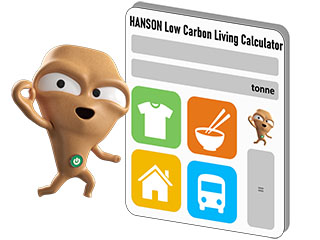
The Government has launched the "Low Carbon Living Calculator" and "Carbon Reducing Habits" webpage to help the public assess and learn how to reduce their carbon emissions in respect of clothing, food, living and commuting, thereby promoting behavioural change towards low-carbon living.
How You can Help Combat Climate Change
We do not have to think big to make a big impact. In Hong Kong, much can be done in our civic infrastructure and the way we live our lives to help combat climate change.
Here are some simple acts everyone can do to make a difference:
- Switch to LED lights;
- Use energy efficient appliances (such as those with Grade 1 energy labels);
- Turn off appliances when they are not in use;
- Maintain temperature setting of air-conditioners at 24-26°C;
- Use public transportation;
- Recycle paper, metals, plastics, glass containers, rechargeable batteries, fluorescent lamps and tubes, regulated electrical equipment, small electrical appliances and beverage cartons at GREEN@COMMUNITY and
- Install a low-flow shower-head and take shorter showers.
The following links will take you to tips on what you can do to combat climate change and reduce your own "carbon footprint" at home, in the office and when you are travelling.
Tips on low-carbon livingTips on saving energyTips on green office managementTips on greener transportation